


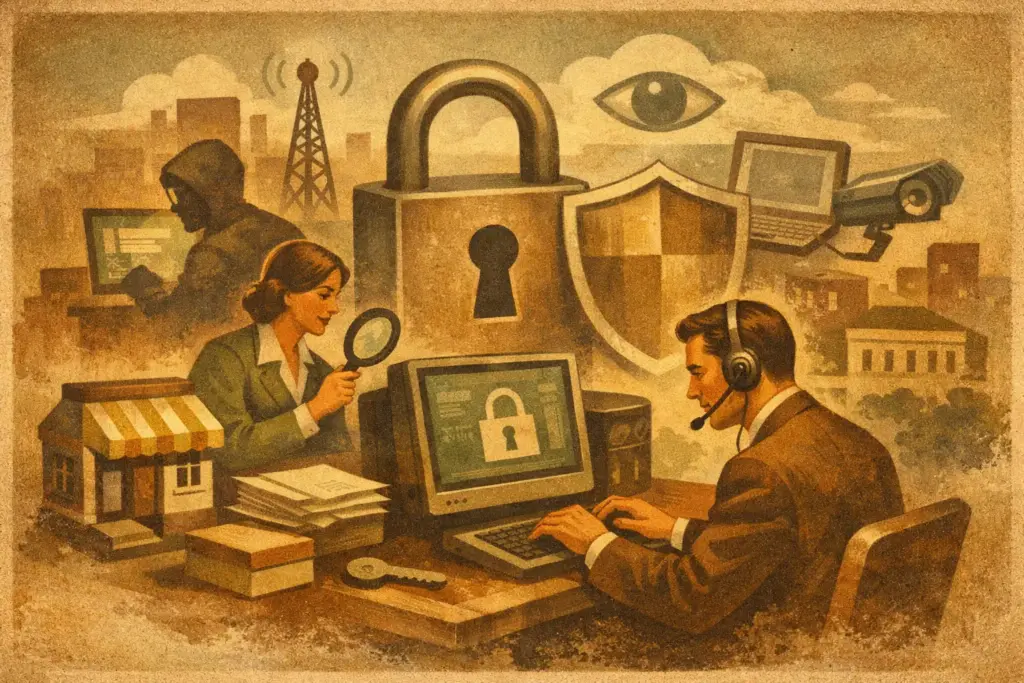
A single suspicious email can be enough to stop a normal working day in its tracks. For a small business, that does not just mean inconvenience. It can mean lost access to files, disrupted customer service, damaged trust, and hours or days spent trying to work out what happened. That is why cyber security services matter so much – not as an optional extra, but as part of keeping the business running.
For smaller organisations, the challenge is rarely a lack of concern. It is usually a lack of time, internal expertise, and clarity about what to do first. Most owners and managers already know cyber risk exists. What they need is a practical way to reduce it without creating more complexity than the business can realistically manage.
What cyber security services actually include
Cyber security services can mean different things depending on the size of the business, the systems in use, and the level of risk. For SMEs, they are usually a mix of prevention, monitoring, user protection, and recovery planning.
That often starts with the basics. Devices need to be patched, accounts need proper protection, and Microsoft 365 needs to be configured securely. Anti-malware tools, email filtering, backup checks, and access controls all play a part. On top of that, there is the ongoing work that tends to get missed internally – reviewing alerts, spotting unusual behaviour, tightening settings as the business changes, and helping users respond sensibly when something looks wrong.
The most useful service is not necessarily the most technical one. It is the one that reduces day-to-day risk in a way the business can maintain.
Why small businesses need cyber security services
Many small firms assume attackers are mainly interested in larger organisations. In practice, smaller businesses are often targeted because they are easier to reach and less likely to have dedicated in-house protection. If your team relies on email, cloud systems, shared files, remote access, and online payments, you already have something worth attacking.
There is also a common gap between buying software and being secure. A business might have antivirus installed and still have weak passwords, no multi-factor authentication, poor backup testing, and too many users with unnecessary access. Security problems often come from a build-up of smaller issues rather than one dramatic failure.
That is where managed support makes a difference. Instead of expecting a director or office manager to become a security specialist, cyber security services provide oversight, routine management, and a clearer plan for what needs attention now versus later.
The biggest risks are often the ordinary ones
When people think about cyber attacks, they often picture something highly sophisticated. The reality for SMEs is usually more mundane. A staff member clicks a convincing email link. A laptop misses updates for months. A former employee still has access to company data. Backups exist, but nobody has checked whether they can actually be restored.
These are not rare edge cases. They are the sort of issues that appear in normal businesses with busy teams and limited internal IT capacity. That is why security should be tied to operations, not treated as a separate technical project that only gets attention after an incident.
Good protection is often about reducing avoidable exposure. That means sensible account security, controlled permissions, secure devices, and clear support when users are unsure. It also means accepting that no system is risk-free. The goal is to lower the chance of disruption and improve the ability to recover quickly if something does go wrong.
Cyber security services and Microsoft 365
For many SMEs, Microsoft 365 is at the centre of daily work. Email, files, Teams, SharePoint, and user identities all sit within the same environment. That makes it productive, but it also makes it a key security priority.
A surprising number of businesses use Microsoft 365 with default or lightly configured settings. The platform itself offers strong security options, but they still need to be enabled, reviewed, and managed properly. Multi-factor authentication, conditional access, secure sharing, mailbox protections, and audit visibility can all improve security significantly when set up well.
This is one area where cyber security services are particularly valuable. Rather than simply licensing the platform and hoping for the best, businesses can get practical support to configure it around real working habits. That matters because security that is too restrictive tends to be bypassed, while security that is too relaxed leaves obvious gaps.
What to expect from a good provider
A good provider should make security clearer, not more confusing. If every conversation is full of jargon, dashboards, and vague warnings, it becomes hard for a business owner to know what is actually being managed.
The better approach is straightforward. You should understand what risks are being reduced, what protections are in place, what still needs improvement, and what would happen if there were an incident. The service should fit the way your business works, rather than forcing you into enterprise-level processes that make little sense for a team of 10, 20, or 50 users.
Support should also be ongoing. Security is not something that gets solved in one project and then left alone. New staff join, devices change, cloud services expand, and threats evolve. A one-off setup can help, but it is regular attention that keeps standards from slipping.
Cyber security services are not just about prevention
Prevention matters, but recovery matters just as much. Even well-managed businesses can still face accidental deletion, hardware failure, account compromise, or ransomware. If that happens, the question shifts from how the issue started to how quickly the business can get back on its feet.
This is why backup and disaster recovery should sit alongside security, not somewhere else on the list. A backup that has not been checked recently offers false reassurance. A recovery plan that only exists in theory tends to fall apart under pressure.
For SMEs, the practical question is simple: if systems became unavailable this afternoon, what would stop tomorrow from becoming a crisis? The right cyber security services help answer that in advance, with tested backups, realistic recovery expectations, and clear support when speed matters.
The trade-off between security and usability
There is always a balance to strike. If security controls are too light, risk increases. If they are too heavy, staff may struggle to work efficiently or start finding workarounds that create new problems.
That is why a sensible provider looks at context. A finance team handling payment data may need tighter controls than a small internal admin function. A fully remote workforce may require a different setup from an office-based business. The right answer depends on the systems you use, the sensitivity of your data, and how much disruption your business could tolerate.
This is also why copying a checklist from a much larger organisation rarely works. Small businesses need proportionate security – strong enough to reduce real risk, but practical enough to support day-to-day work.
How cyber security services support business confidence
Security is often discussed as a technical issue, but for most business leaders it is really about confidence. Can the team work safely? Can customer information be handled responsibly? Can the business keep operating if something goes wrong? Can technology decisions be made without second-guessing every risk?
Well-managed cyber security services create that confidence by giving smaller organisations structure and continuity. Instead of reacting to problems one by one, the business has an informed view of its systems, users, and priorities. That makes it easier to budget sensibly, plan improvements, and avoid the stop-start pattern that often comes with ad hoc IT support.
For businesses that do not have internal IT leadership, this kind of support can be especially valuable. It bridges the gap between technical detail and practical decision-making. A service provider should not just point out problems. They should help you understand what matters, what can wait, and what will have the biggest effect on resilience and productivity.
Undo IT Support works with smaller businesses in exactly that way, combining day-to-day IT management with clear, practical security support that fits the needs of growing organisations.
Choosing a service that fits your business
If you are reviewing providers, start with the basics. Ask how they protect user accounts, monitor systems, manage updates, support Microsoft 365, and handle backup and recovery. Ask how incidents are escalated and what ongoing guidance you can expect. Just as importantly, ask how they explain issues to non-technical decision-makers.
The best fit is rarely the provider offering the longest feature list. It is the one that understands your size, your pressures, and the fact that technology has to support the business rather than distract from it. Security should feel like a managed part of normal operations, not a separate world that only specialists can understand.
For most SMEs, the strongest position is not trying to do everything at once. It is putting the right foundations in place, keeping them maintained, and working with a partner who can guide the next step when the business is ready.
A sensible security service should leave you with fewer surprises, fewer weak spots, and a lot more certainty about how your business would cope when something does not go to plan.